
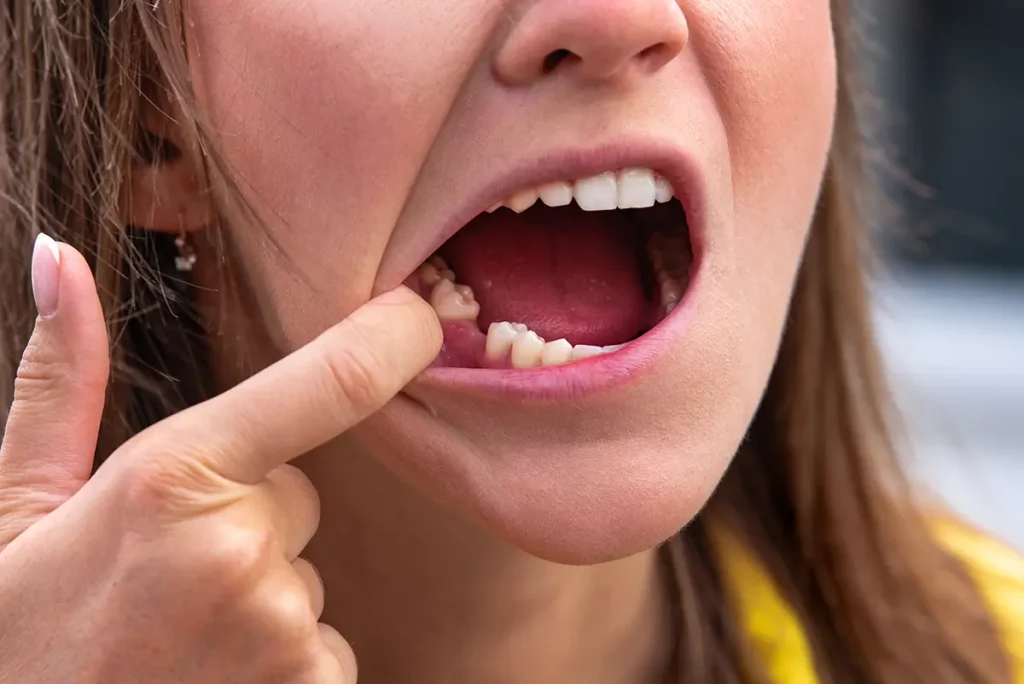

Tooth loss can be caused by many factors. Injury, decay, gum disease, and aging are among the factors that may cause tooth loss. Losing a tooth means a lot more than just a tooth gone. This loss slowly affects the overall health of your gums and jawbone. Every tooth in your jawbone plays an important role in your mouth, keeping your bite, jaw, and overall oral health functioning properly.
At Quality Dentures of Fredericksburg, we help patients understand the importance of oral health and the benefits of dentures. If you’ve been putting off replacing missing teeth, understanding the long-term effects can help you make an informed decision about what the best option is for your dental health.
Remaining Teeth Shift
One of the first, and most noticeable, things that happen after tooth loss is the shifting of your other teeth. Naturally, your teeth support each other, and when one is missing. The neighboring teeth can gradually shift into the empty space.
As your teeth move, you may notice some of the following:
- Changes in your bite
- Crooked or crowded teeth
- Food becoming trapped more easily
- Increased wear and discomfort on certain teeth
Shifting teeth can also make brushing and flossing more difficult, increasing your risk of cavities and gum disease.
Bone Loss in the Jaw
Your jawbone relies on stimulation from your tooth roots to stay healthy and strong. Every time you bite or chew, your teeth are sending pressure to your jaw. Without this sensation, that area of your jaw will begin to shrink, which is a process called bone resorption.
As your jawbone loses density, it will essentially begin to dissolve, and your body will absorb the minerals.
Jawbone resorption can cause:
- Changes in your facial appearance
- A sunken or aged look around the mouth
- Difficulty chewing
- Reduced support for neighboring teeth
- Difficulty wearing dentures comfortably if too much bone is lost
The longer a tooth is missing, the more bone loss can occur.
Chewing Becomes Difficult
All your teeth work together to break down food. When a tooth is missing, it can affect how you handle certain foods. Foods such as crunchy vegetables or nuts can become especially difficult to get through. Some people also find it difficult to eat chewy foods, such as meat.
If you go a long time avoiding these hard-to-chew foods, it will start to affect your nutrition. Limiting these healthy foods can affect your nutrition and overall health. Some people also begin chewing only on one side of the mouth, placing extra stress on the remaining teeth and jaw.
Other Teeth May Wear Down Faster
When even one tooth is gone, your remaining teeth must work harder. They absorb more pressure, may get more impact than before, and you may notice your bite feeling strange. This uneven pressure and new bite can cause excessive wear over time.
Extra stress on your teeth may increase the likelihood of:
- Cracked teeth
- Chipped enamel
- Tooth sensitivity
- Additional tooth loss
Replacing missing teeth helps distribute biting forces more evenly and protects your natural teeth from unnecessary strain. Even if you don’t feel a difference immediately, your teeth are still impacted.
Gum Health Can Be Affected
The gap left by a missing tooth often becomes a site where food particles collect. Even if you have a great dental cleaning routine, buildup can start to form around the site. If plaque and bacteria are allowed to build up, your risk of gum inflammation and periodontal disease increases.
Healthy gums are essential for supporting both your remaining natural teeth and any future dentures or partial dentures you may receive. Once your gums begin to be affected, this can quickly lead to worsening oral health. It is much easier and less stressful to maintain good oral health than to treat disease and infection.
Impact on Confidence
If your tooth is lost, you’ll quickly notice you have a hard time smiling, laughing, or even speaking to people. Due to fear that someone will see it, many people will limit their mouth movements in ways that feel uncomfortable or unnatural. Being self-conscious about missing teeth is completely normal, and many people feel this way. Even eating in public becomes embarrassing for some people. This small change to your appearance can have a huge impact on your confidence.
You may not notice it now, but your confidence is highly linked to your teeth and smile. Completing your smile with dentures or implants is the best way to restore your spark.
Dentures Can Restore Function and Appearance
Fortunately, missing teeth don’t have to be a permanent problem. Modern dentures are more comfortable, natural-looking, and functional than ever before!
Depending on your needs, your dentist may recommend:
To find out which option is best for you, schedule a consultation with Quality Dentures of Fredericksburg. Our team will explain your options, and together we will decide on the solution for you.
Don’t Wait to Protect Your Smile
Dental treatment can be stressful and often put on the back burner. Procrastinating won’t be a solution! Missing teeth rarely become less of a problem with time.
If you’re missing one or more teeth, scheduling a consultation with Quality Dentures of Fredericksburg is an excellent first step. Our dental professionals can evaluate your oral health, discuss your options, and recommend a denture treatment plan that fits your lifestyle and goals. Get your free consultation today, and we’ll help you get the smile of your dreams!